Part of our “May at Work: Mental Health Matters” series, looking at how mental health shows up in remote and nomadic lifestyles.
Remote work can be freeing.
No commute. More flexibility. The ability to work from home, a café, a coworking space, or another country entirely.
But during Mental Health Awareness Month, it is worth talking about a part of remote work that does not always make the highlight reel: burnout.
Because when your office can be anywhere, work can start to feel like it is everywhere.
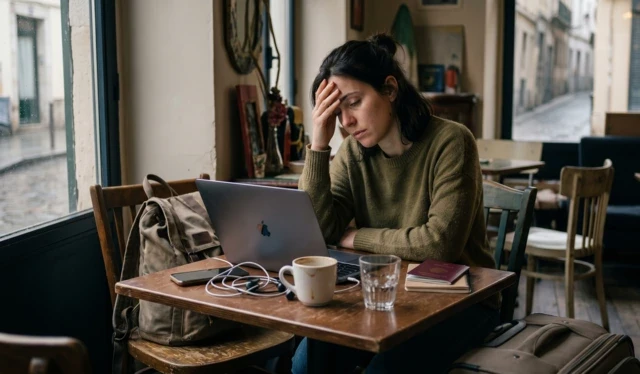
The Hidden Side of Remote Burnout
Remote work burnout can be sneaky.
It may not happen all at once. It can build slowly through skipped breaks, late-night emails, time zone juggling, endless video calls, and the feeling that you should always be available because you are not physically “at work.”
For digital nomads, the pressure can feel even more complicated.
You may be managing client deadlines while adjusting to a new city. Working across time zones. Trying to make friends. Finding Wi-Fi. Figuring out where to live next. Keeping up with the version of the lifestyle that looks effortless online.
That is a lot to carry.
When Flexibility Turns Into Pressure
Flexibility is one of the biggest benefits of remote work, but without structure, it can become its own kind of stress.
You might start working earlier because your laptop is right there. Then later because no one is watching the clock. Then weekends because you “just need to catch up.”
Over time, the line between work and life disappears.
And when there is no clear off-switch, your brain never fully gets to rest.
What Remote Burnout Can Look Like
Remote burnout does not always look obvious from the outside. You may still be getting work done. You may still be posting beautiful photos. You may still seem productive.
But inside, it can feel like:
- Constant mental fatigue
- Difficulty focusing
- Feeling isolated or disconnected
- Losing excitement about travel or flexibility
- Working longer hours than you did in an office
- Feeling guilty when you are not being productive
Burnout can be especially hard to admit when the lifestyle is supposed to feel like freedom.
But freedom does not mean you are immune to stress.
Building a More Sustainable Remote Life
The goal is not to give up remote work. It is to make it healthier.
That may mean:
- Setting a clear start and stop time
- Creating a daily shutdown routine
- Taking breaks away from your screen
- Working from a coworking space for connection
- Scheduling rest days the same way you schedule work
- Choosing slower travel when constant movement feels exhausting
A sustainable remote life needs more than a laptop and Wi-Fi. It needs rhythm, connection, and space to recover.
The Bottom Line
Remote work gives people more control over where they work.
But mental health depends on more than location.
This week is a reminder that working from anywhere should not mean working all the time. Burnout can happen in a home office, a hotel room, a coworking space, or a beachside café.
The setting may change, but your need for rest does not.
Keep the Conversation Going
This is Week 2 of our “May at Work: Mental Health Matters” series.
Missed Week 1? Start here: Mental Health on the Move: The Reality Behind Remote Freedom
Next week, we’ll explore how remote workers and nomads can build boundaries and routines without losing the freedom they value.
Looking for mental health support or workplace wellness resources? Start with our full Mental Health Awareness Month guide here.